
Good landscape lighting makes a yard usable after dark, helps people move safely along steps and paths, and shows off trees and planting. Poor lighting glares, wastes energy and bothers neighbors. This guide covers the types of lighting, where to put it and what to check before installation.
Key takeaways
- Start with safety: steps, paths and entries.
- Low-voltage LED systems are common for landscape lighting.
- Aim lights to avoid glare into eyes, windows and the night sky.
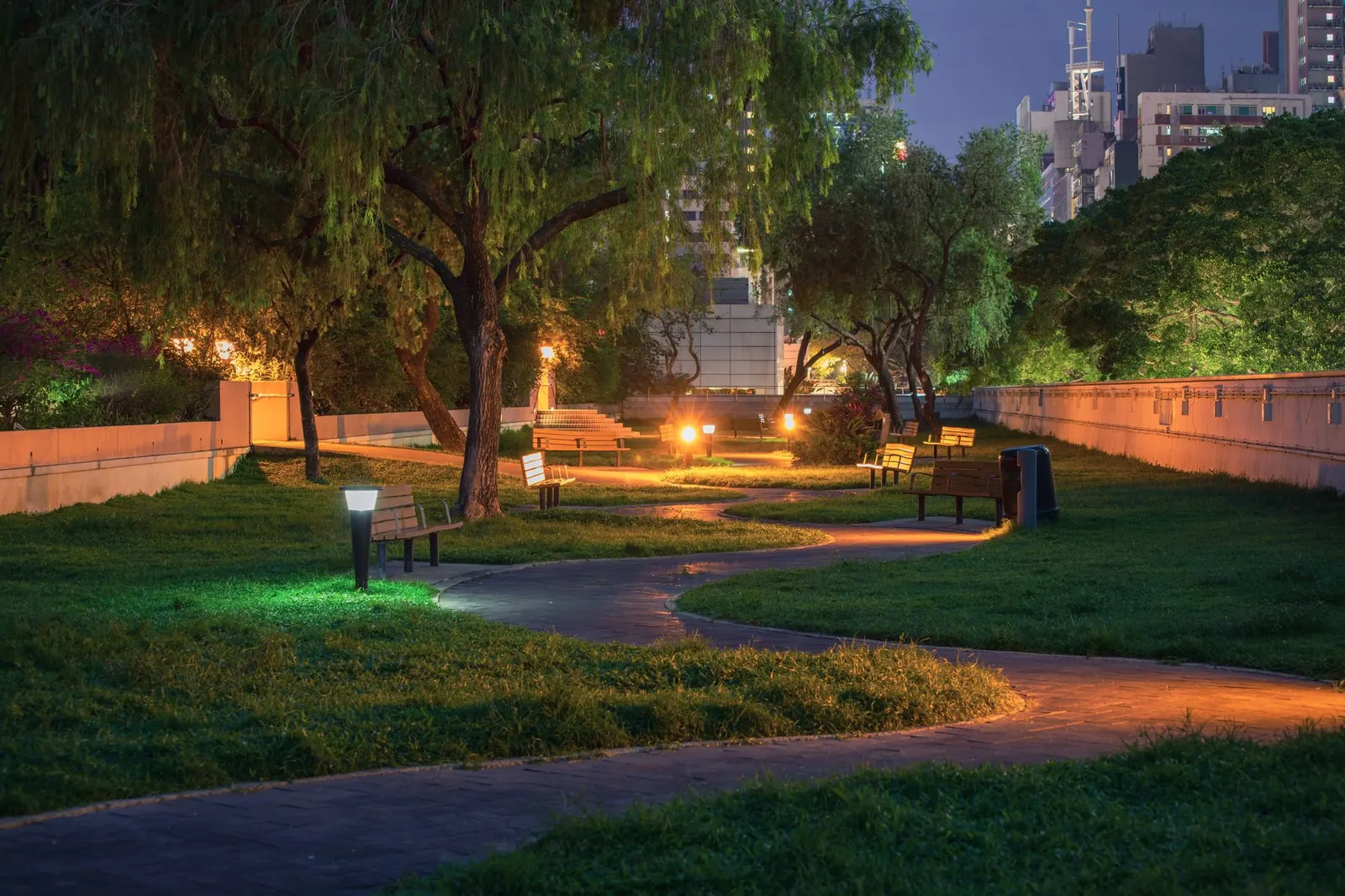
Start with safety
Light steps, changes in level, paths and entrances first. People should see where they are walking without being dazzled. Soft, even light along a path is usually better than a few bright spots.
Types of lights
- Path lights: low fixtures that spread light along walkways.
- Step lights: set into walls or risers to light stairs.
- Uplights: aimed up at trees, walls or features.
- Downlights: mounted in trees or on structures, shining down like moonlight.
- Wall and deck lights: for seating and entertaining areas.
Low-voltage vs line-voltage
Many homeowners use low-voltage systems, where a transformer plugged into an outdoor outlet reduces household current to a lower voltage for the fixtures. These are often DIY-friendly. Line-voltage lighting runs on standard household current and usually requires a licensed electrician and permits. Check local rules either way.
Solar lights
Solar fixtures need no wiring and are easy to place, but their brightness and run time depend on sun exposure and battery condition. They work best as accents in sunny spots rather than as the main lighting for steps.
LED fixtures
LED fixtures use less energy than older bulbs and last longer. Look at color temperature: warmer light often looks more natural in gardens, while very cool light can look harsh. Consistent color across fixtures looks more polished.
Lighting options at a glance
| Type | Best for |
|---|---|
| Path lights | Walkways and borders |
| Step lights | Stairs and level changes |
| Uplights | Trees, walls, features |
| Downlights | Natural moonlight effect |
| Solar | Accents in sunny spots |
Avoid glare and light spill
Aim fixtures so light falls where it is needed and not into eyes, neighbors’ windows or the sky. Shielded fixtures help. Some communities have outdoor lighting rules to limit light pollution; check before installing bright fixtures.
Tip: Before buying fixtures, walk the yard at night with a strong flashlight and try lighting trees and paths from different angles. It shows which effects you like and where you really need light.
Controls
Timers, photocells that switch on at dusk and smart controls help lights run only when needed. Zones let you light seating areas separately from paths.
Wiring and digging
Low-voltage cable is usually buried shallowly along beds and paths. Contact 811 before digging trenches, and record where you run cables, since they are private lines that 811 locators may not mark; see Call 811 Before You Dig: What Homeowners Need to Know.
Which approach fits
For simple path and accent lighting, a low-voltage LED kit is a common DIY choice. For larger systems, line-voltage work or complex designs, hire a professional and a licensed electrician where required. See Checking a Landscaper’s License and Insurance.
Planning the layout
Sketch the yard and mark where people walk, sit and enter the house after dark. Add the trees and features you would like to highlight. Then place fixtures: path lights along walkways at a comfortable spacing, step lights at every level change, and a few uplights on key trees. Keep the number of fixtures modest; darkness between pools of light is part of the effect.
Transformers and power
For low-voltage systems, the transformer must be sized for the total wattage of the fixtures, with some capacity to spare for additions. It plugs into an outdoor outlet, which should be a weather-protected, ground-fault protected circuit. Long cable runs can dim the last fixtures, so plan several shorter runs rather than one long one, following the manufacturer’s guidance.
Maintenance
Clean lenses, trim plants that grow over fixtures, check that fixtures remain upright after mowing and replace any damaged cable. A walk around at dusk each season shows what needs attention.
Common mistakes
- Over-lighting with too many bright fixtures.
- Glare aimed at windows and eyes.
- Mixing light colors.
- Burying cables without recording where.
Frequently asked questions
Can I install landscape lighting myself?
Low-voltage systems are often DIY-friendly. Line-voltage work usually needs a licensed electrician.
Are solar lights good enough?
They work as accents in sunny spots but are less reliable for key safety lighting.
What color light is best?
Warmer light often looks more natural in gardens. Keep color consistent.
Do I need to call 811 for lighting cable?
Yes if you dig trenches. Low-voltage cable is often buried shallowly, but any digging should start with an 811 request.
For small spaces, see Landscaping a Small Yard: Making Every Square Foot Count.