
A patio is often the most expensive single item in a landscape project and the hardest to change later. The material affects cost, appearance, maintenance and how water drains from the yard. This guide compares the common patio materials so you can choose with the whole yard in mind.
Key takeaways
- Concrete, pavers, natural stone and gravel each trade cost, look and maintenance differently.
- The base underneath matters as much as the surface for long-term performance.
- Permeable options let rain soak in rather than run off.
Poured concrete
Poured concrete is a common, versatile choice. It can be plain, colored, stamped or finished with exposed aggregate. It forms one continuous surface, which is easy to sweep. Concrete can crack as soil moves, and repairs tend to show. It sheds water, so drainage needs planning.
Concrete pavers
Pavers are individual units laid on a compacted base with sand joints. They come in many shapes and colors and can be lifted and relaid if the base settles or a utility repair is needed. Joints can grow weeds unless filled with suitable joint sand and maintained. Some pavers are designed as permeable systems that let water drain through wider joints into a specially built base.
Natural stone
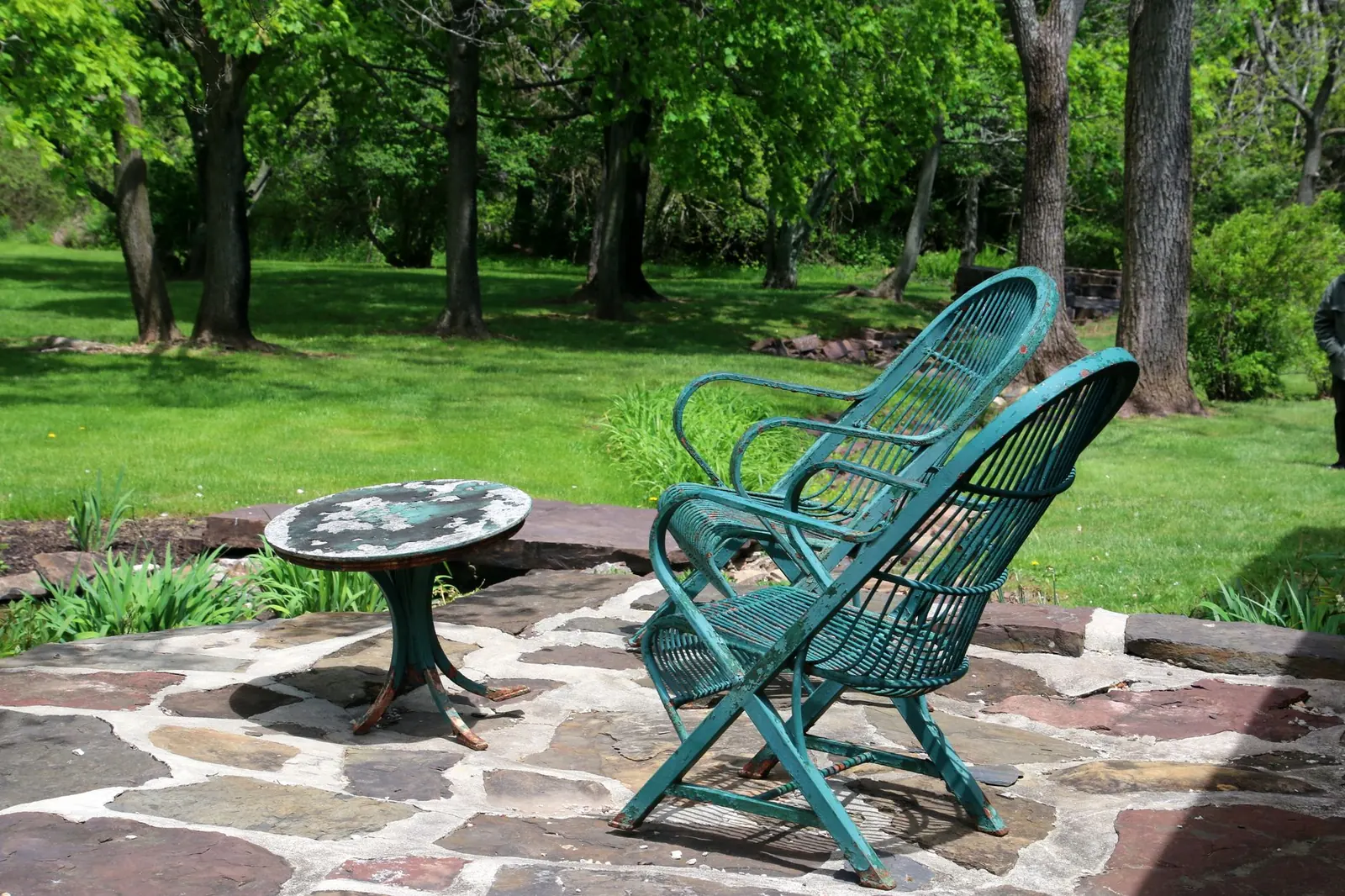
Flagstone and cut stone give a natural look that suits many garden styles. Stone varies in thickness and texture, which affects installation and comfort underfoot. It is often among the costlier options, but durable when installed on a proper base.
Brick
Brick suits traditional homes and can be laid in many patterns. Paving bricks rated for exterior use are needed for durability. Like pavers, bricks can be lifted and relaid.
Gravel
Gravel patios are inexpensive, permeable and quick to install. They suit informal gardens and dry climates. They can be less comfortable for furniture and need edging to keep gravel in place, plus occasional raking and topping up.
Materials at a glance
| Material | Look | Drainage | Maintenance |
|---|---|---|---|
| Poured concrete | Clean, continuous | Sheds water | Cracks may need repair |
| Concrete pavers | Many styles | Joints; permeable versions | Joint sand, weeds |
| Natural stone | Natural, varied | Depends on joints | Low if well built |
| Brick | Traditional | Joints | Resetting over time |
| Gravel | Informal | Permeable | Raking, topping up |
The base matters
Most patio failures come from what is underneath: poor compaction, too thin a base or water collecting beneath. A good installer prepares and compacts a base appropriate to the material and soil. Ask each contractor to describe the base depth and material in the estimate; see How to Compare Landscaping Estimates and Read the Contract.
Drainage and slope
Patios should slope slightly away from the house so water does not run toward the foundation. Plan where the water goes: to a lawn, a planted area or a rain garden. Permeable paving and gravel let more water soak in, which EPA’s stormwater resources encourage as a way to reduce runoff.
Tip: Lay out the patio with a hose or string and set your actual table and chairs inside it before deciding the size. Many patios end up too small once furniture and walking space are added.
Heat and comfort
Dark materials can get hot in direct sun, and some stone surfaces become slippery when wet or icy. Consider texture and color for your climate and whether shade will be added.
Before digging
Patios involve excavation. Contact 811 before any digging; see Call 811 Before You Dig: What Homeowners Need to Know.
Which material fits
For a budget-friendly, informal area, gravel is hard to beat. For a clean, continuous surface, concrete works well. For flexibility and style choice, pavers are popular. For a natural, high-end look, stone suits many gardens. Match the material to the house and to how the space will be used.
Edges and transitions
Pavers, brick and gravel need solid edging so the surface does not spread outward over time. Where the patio meets the lawn, a mowing strip set flush with the grass makes maintenance easier. Where it meets planting beds, a slightly raised edge keeps mulch and soil off the paving. Planning these transitions at the start avoids untidy repairs later.
Common mistakes
- Choosing by surface appearance and ignoring the base.
- Sloping the patio toward the house.
- Making it too small for furniture.
- Forgetting edging for pavers and gravel.
Frequently asked questions
Which patio material lasts longest?
Durability depends heavily on the base and installation. Well-built concrete, pavers and stone can all last many years.
Are permeable pavers worth it?
They can reduce runoff and puddling. They need a specially designed base and joint maintenance.
Can I build a patio myself?
Small gravel or paver patios are common DIY projects. Larger or sloped sites often benefit from a professional.
See also Retaining Walls: When DIY Works and When to Hire a Pro.