
Tree work is some of the most dangerous work around a home. Removing a large branch, pruning near a roof or taking down a dead tree involves height, heavy weights and chainsaws. It also affects the health of trees that took decades to grow. This guide explains what an ISA Certified Arborist is, when to hire one and what to check.
Key takeaways
- ISA certification is a voluntary credential showing an arborist has met a knowledge standard and keeps up continuing education.
- Hire trained professionals for pruning or removing large trees, storm damage and work near lines or buildings.
- Verify credentials, insurance and a written estimate, as with any contractor.
What an arborist does
According to the International Society of Arboriculture, arborists can help with pruning for health, appearance and safety; tree removal when a tree is dead, dying, hazardous or obstructing; emergency care after storms; planting; and other services such as plant health care, cabling and bracing for weak branches, and soil aeration.
What ISA certification means
The ISA describes its certification as a nongovernmental, voluntary process by which individuals document their knowledge. Certified Arborists have shown a level of knowledge in areas such as tree biology, diagnosis, maintenance, safety and related practices, and they must continue their education to keep the certification. Certification holders are held to a code of ethics.
When to hire an arborist
- Pruning large trees or anything that requires climbing or lifts.
- Removing trees, especially near buildings, fences or lines.
- Storm-damaged trees.
- Signs of decline, such as dead branches, cracks, fungus or leaning.
- Advice on which trees to plant and where.
The ISA notes that tree work should be done only by those trained and equipped to work safely in trees.
How to verify credentials
The ISA runs an online directory where the public can find and verify ISA-credentialed professionals. Ask for the arborist’s certification number and check it. Note that the directory is voluntary; some credential holders choose not to list their location.
Other checks
Treat an arborist like any contractor: check any state or local license required for tree work, ask for proof of liability and workers’ compensation insurance, get a written estimate describing the work, and read the contract. The FTC’s advice on home improvement hiring applies; see Checking a Landscaper’s License and Insurance.
Checks at a glance
| Check | Why |
|---|---|
| ISA certification | Shows tested knowledge and continuing education |
| Insurance | Tree work carries high risk |
| Written estimate | Defines exactly what will be cut or removed |
| Cleanup terms | Wood, brush and stump removal |
| Permits | Some towns regulate tree removal |
Pruning practices to ask about
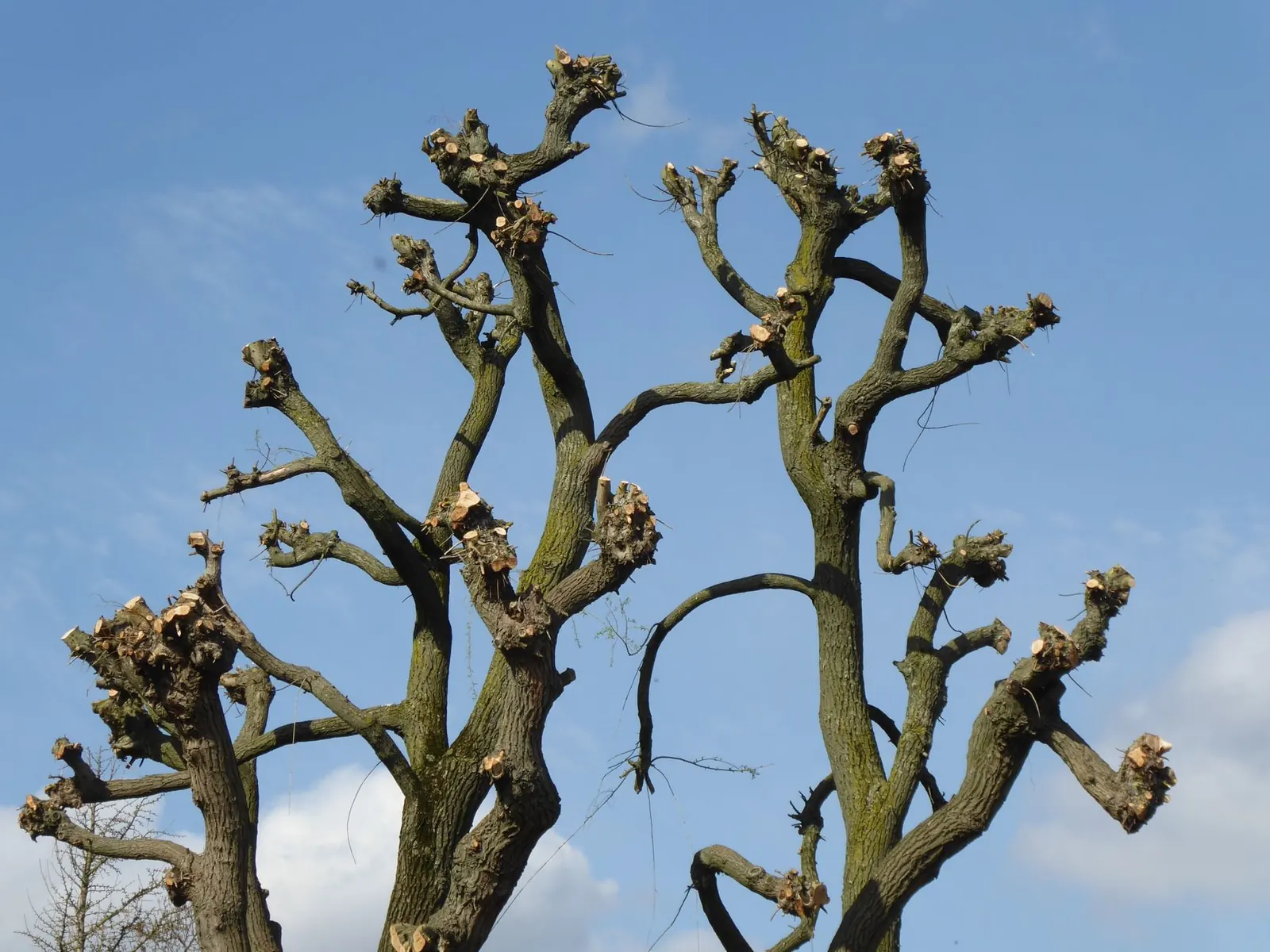
Ask how the arborist will prune and why. Good pruning removes specific branches for a purpose, such as clearance, health or structure. Be cautious of offers to “top” a tree by cutting back main branches to stubs, a practice widely discouraged by tree care professionals because it weakens trees.
Tip: Ask the arborist to mark or photograph the branches they plan to remove before work begins. It makes the written estimate concrete and avoids surprises.
Tree removal permits
Some towns and cities regulate removal of trees above a certain size or of protected species. Ask the arborist about local rules and check with your municipality.
Storm damage
After storms, door-to-door offers of tree work are common. The FTC warns that contractors who knock on the door because they are “in the area” and pressure you for quick decisions can be a sign of a scam. Hazardous trees need prompt attention, but take time to verify who you hire.
Which professional fits
For routine small shrub trimming, a landscaper may be fine. For trees, especially large ones, choose an arborist with ISA certification and proper insurance. For advice on planting, see How to Plant a Tree: Step by Step for a Healthy Start.
Reading the arborist’s estimate
A good estimate names the trees, the work on each one and what will be left behind. For removals, it should say whether the stump will be ground, how deep, and whether wood and chips will be hauled away or left. For pruning, it should describe the purpose, such as clearance from the roof or removal of dead wood. Compare estimates on the same work, as you would for any landscaping job; see How to Compare Landscaping Estimates and Read the Contract.
Common mistakes
- Hiring the first door-to-door crew after a storm.
- Agreeing to topping.
- Not checking insurance for tree work.
- Leaving cleanup terms out of the estimate.
Frequently asked questions
What is an ISA Certified Arborist?
A tree care professional who passed the ISA’s certification process and keeps up continuing education.
How do I verify an arborist?
Use the ISA’s online credential directory and ask for the certification number.
Is tree topping bad?
It is widely discouraged by tree care professionals because it weakens trees.
See also Choosing Trees and Shrubs: Right Plant, Right Place.