
Good landscape design is less about picking beautiful plants and more about organizing the yard so it works: where you sit, where you walk, what you see from the window and where the water goes. This guide covers the basic principles designers use, so you can plan your own yard or talk more clearly with a landscaper.
Key takeaways
- Start with how you use the space and the site conditions, not with plants.
- Group plants with similar water and sun needs.
- Plan for mature size so the design still works in five and ten years.
Start with a site inventory
Before any design, list what you have: sun and shade through the day, soil type, slopes, where water flows and pools, existing trees, views to enjoy or hide, utilities, and access for people and equipment. A simple base map on graph paper or a printout of a satellite image makes this easier.
Decide how you will use the yard
List the activities you want to support: dining, play, gardening, pets, relaxing, storage. Each needs space and a sensible location. A dining area near the kitchen door, a play lawn visible from the house and a vegetable bed in full sun are examples of matching use to place.
Create zones and paths
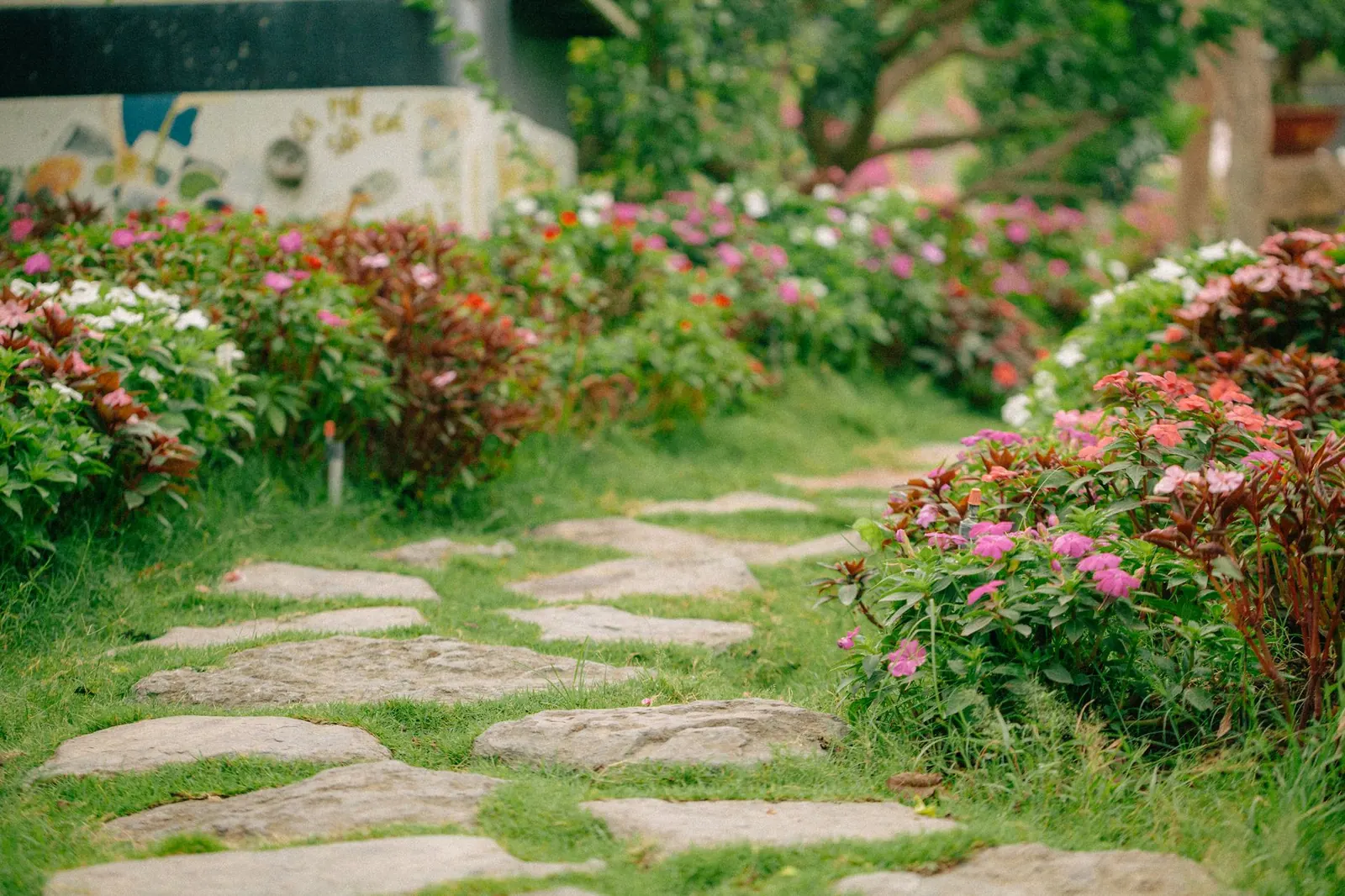
Designers divide yards into areas, sometimes called rooms, linked by paths. Frequently used areas stay close to the house; lower-maintenance planting can go further away. Paths should follow the way people actually walk, or they will cut across the lawn anyway.
Group plants by needs
EPA’s WaterSense program encourages water-smart landscapes that group plants with similar water needs and choose plants suited to local conditions. Grouping means you can water each zone appropriately rather than overwatering some plants to keep others alive. The same idea applies to sun and shade. See Water-Wise Landscaping: Xeriscaping Basics for Any Region.
Plan for mature size
A small shrub from the nursery may grow several feet wide. Check mature height and spread before planting, especially near the house, paths and power lines. Crowded plantings look full quickly but need constant pruning later.
Design principles in brief
- Repetition: repeating plants or colors ties the yard together.
- Balance: visual weight on both sides of a view feels calm.
- Layers: tall plants at the back, mid-height in the middle, groundcovers in front.
- Focal points: a tree, bench or feature to draw the eye.
- Simplicity: fewer kinds of plants in larger groups often look better than one of everything.
Design elements at a glance
| Element | Question to answer |
|---|---|
| Use | What will happen in each area? |
| Conditions | Sun, shade, soil, water flow |
| Circulation | How do people move through? |
| Plants | Right plant for the conditions and space |
| Maintenance | How much time will it take each season? |
Water and drainage first
Water should move away from the house foundation. Low spots can become rain gardens rather than problems; see Rain Gardens for Homeowners: Turning Runoff Into a Garden. Fix drainage before installing patios and beds, not after.
Tip: Live with the yard through at least one season before making big changes if you have just moved in. You will learn where the sun falls in winter and summer and where water goes in heavy rain.
Choosing plants
Check your USDA plant hardiness zone and choose plants suited to it, then consider native plants that support local wildlife. See USDA Plant Hardiness Zones Explained: Choosing Plants That Survive Your Winters and Native Plants for Your Yard: Why They Help and How to Choose Them.
Phasing the work
Most yards do not need to be done at once. A common order is drainage and grading, then hardscape, then trees, then shrubs and perennials, then lawn or groundcover. Doing it in phases spreads the cost and lets you adjust as you go.
Materials and style
Materials set the character of a yard as much as plants do. Stone, brick, concrete, gravel and wood each suit different house styles. Choosing materials that echo the house, such as brick paths with a brick home, makes the whole property look connected. Keep the number of materials small; two or three used consistently usually look better than many used once.
Budgeting a design
List the elements in order of importance and price the essentials first, usually drainage, grading and paths. Plants are often the most flexible item: smaller sizes cost less and grow in. A design done in phases lets you spread the cost over several seasons without redoing work.
Common mistakes
- Buying plants before planning.
- Ignoring mature size.
- Mixing thirsty and drought-tolerant plants in one bed.
- Building patios where water collects.
Frequently asked questions
Do I need a landscape designer?
Not always. For complex yards, slopes or large budgets, a designer can save costly mistakes.
Where should I start?
With a site inventory: sun, soil, slope and water flow.
How do I make a yard low maintenance?
Choose plants suited to your conditions, group them by needs, plan for mature size and use mulch.
If you plan to hire help, read How to Hire a Landscaper: A Step-by-Step Guide for Homeowners.