
Mulch is one of the simplest ways to improve a garden: it holds moisture, keeps soil temperatures steady, suppresses weeds and makes beds look finished. It is also easy to overdo. Mulch piled high against tree trunks is a common sight and a common problem. This guide covers how to mulch well.
Key takeaways
- A layer of two to three inches is the ISA’s recommendation around newly planted trees.
- Keep mulch off tree trunks and plant stems.
- Organic mulches improve soil as they break down; inorganic mulches last longer.
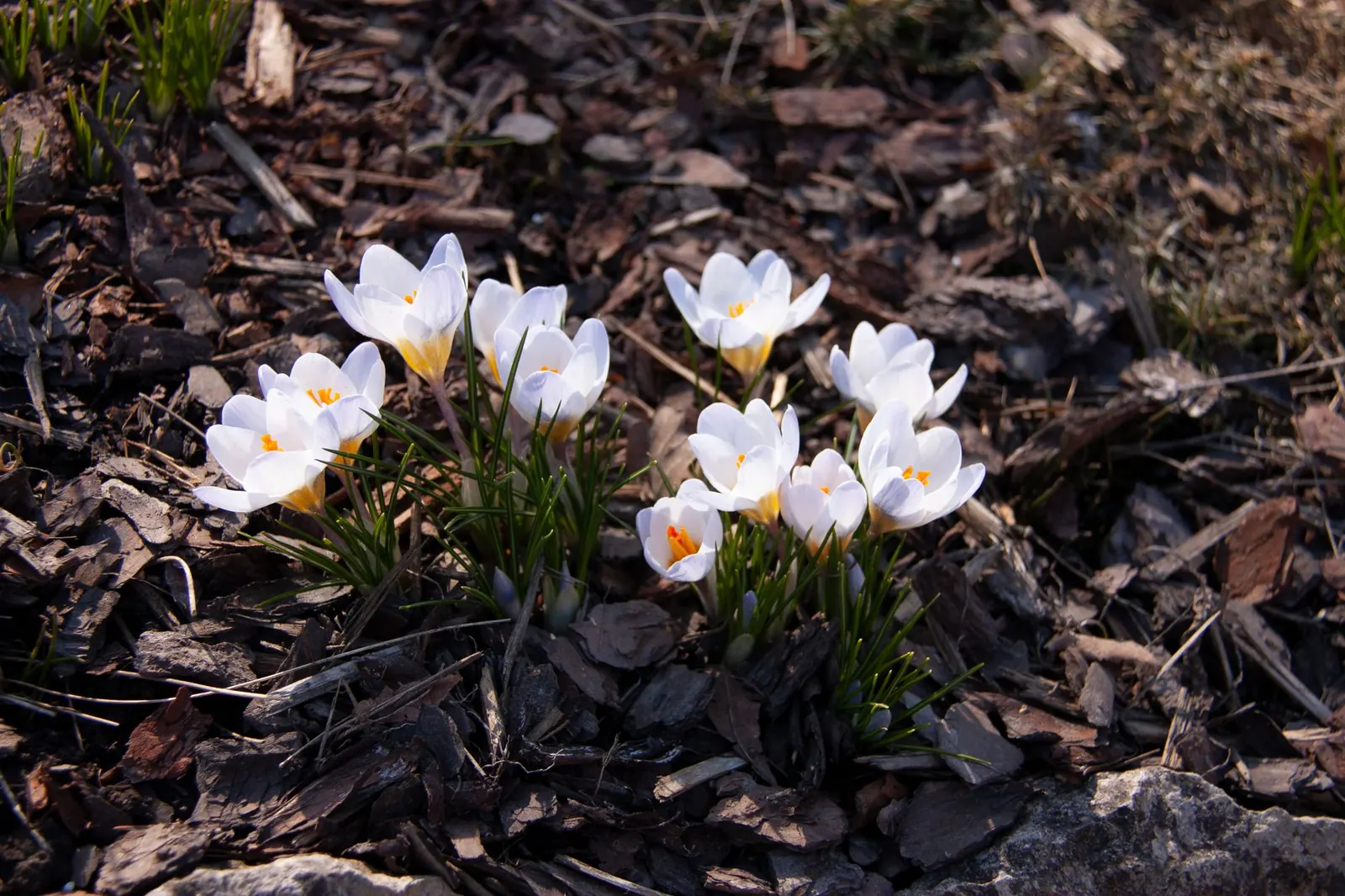
Why mulch
Mulch reduces evaporation from the soil, moderates soil temperature, suppresses weed seeds and, if organic, adds organic matter to the soil as it breaks down. EPA’s water-wise landscaping advice includes mulch as a way to keep water in the soil. See Water-Wise Landscaping: Xeriscaping Basics for Any Region.
How deep
For newly planted trees, the International Society of Arboriculture recommends a two- to three-inch layer of mulch, without piling much against the trunk, and a mulch-free area of one to two inches around the base. The same general depth works for many shrub and perennial beds. Thicker layers can keep soil too wet or prevent water and air from reaching roots.
Avoid mulch volcanoes
Mulch piled in a cone against a tree trunk, often called a mulch volcano, keeps bark constantly moist and can encourage decay, pests and roots that grow into the mulch. Pull mulch back so the trunk flare is visible.
Organic mulches
Shredded bark, wood chips, pine needles, leaves and compost are common organic mulches. They break down over time and need topping up, often yearly. Wood chips from local tree work are sometimes available free or at low cost.
Inorganic mulches
Gravel, stone and rubber mulches do not break down. Gravel suits dry gardens and succulents. Stone can heat up in sun, which some plants tolerate and others do not. Inorganic mulches do not improve soil.
Mulch types at a glance
| Mulch | Pros | Considerations |
|---|---|---|
| Shredded bark | Stays in place, looks tidy | Top up yearly |
| Wood chips | Inexpensive, improves soil | Coarse look |
| Pine needles | Light, stays loose | Best in some regions and styles |
| Leaves | Free | Shred to prevent matting |
| Gravel | Long-lasting | No soil benefit, can heat up |
Landscape fabric
Fabric under mulch can limit weeds at first, but organic mulch breaking down on top eventually creates a layer where weeds grow anyway, and fabric can make adding plants harder. Many gardeners skip it in planting beds and use it mainly under gravel paths.
Tip: Before adding new mulch, rake the old layer and check the depth with a finger. If there is already two inches, you may only need a light refresh rather than a new layer.
When to mulch
Spring, after soil has warmed, and fall are common times. Mulching new plantings right after planting helps them establish.
Mulch in rain gardens and slopes
Use shredded mulch that knits together in rain gardens and on slopes; light mulches can float away in heavy rain. See Rain Gardens for Homeowners: Turning Runoff Into a Garden.
Which mulch fits
For most planting beds, shredded bark or wood chips at two to three inches work well. For dry gardens, gravel may suit better. For a free option, shredded leaves work in informal beds.
Mulch around shrubs and perennials
Around shrubs, keep mulch a few inches from the stems, much as with trees. Around perennials, a thinner layer lets plants spread and self-seed where you want them. Avoid burying the crowns of perennials, which can rot in wet mulch.
Where to get mulch
Garden centers sell bagged mulch, which is convenient for small beds. For larger areas, bulk mulch delivered by the cubic yard is usually more economical. Some towns offer free mulch or compost made from collected yard waste. Ask what the material is made of; wood mulches from clean, untreated wood are the usual choice for planting beds.
How much to buy
Measure the length and width of each bed, multiply to get the area, and allow for the depth you want. Suppliers often have calculators that turn area and depth into cubic yards or bags.
Common mistakes
- Piling mulch against trunks.
- Adding a thick new layer every year without checking depth.
- Using light mulches on slopes.
- Relying on fabric under organic mulch.
Frequently asked questions
How much mulch should I use?
Two to three inches is a common recommendation, including the ISA’s for new trees.
Should mulch touch the tree trunk?
No. Leave a small mulch-free area around the trunk.
Do I need to remove old mulch?
Not always. Check the depth and refresh only as needed.
For planting guidance, see How to Plant a Tree: Step by Step for a Healthy Start.